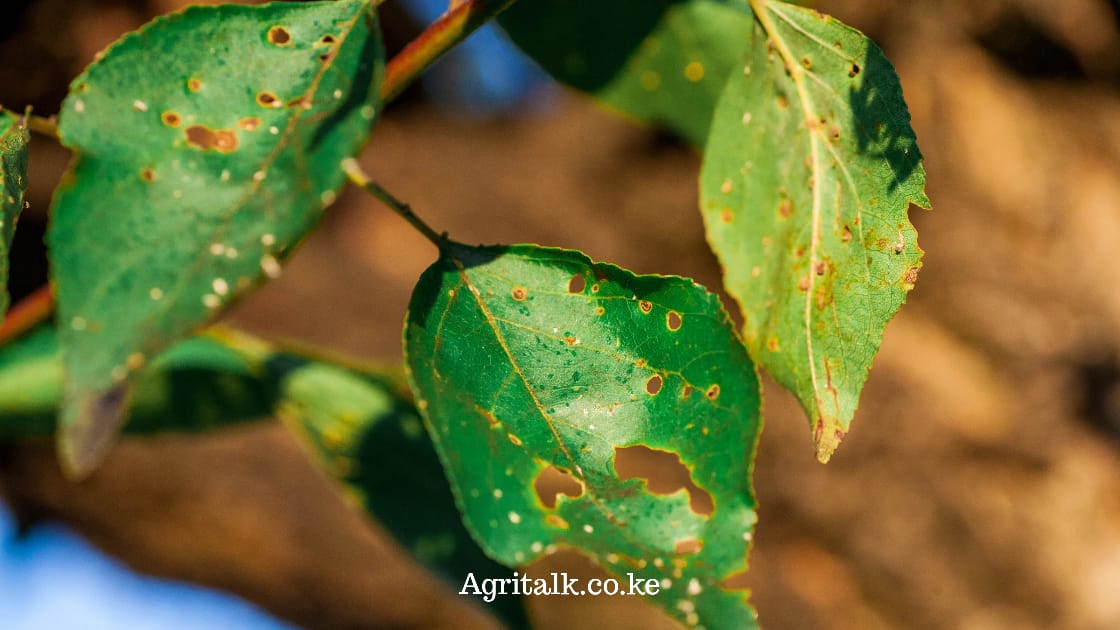

Pests and diseases are among the biggest challenges facing Kenyan farmers today. Effective pest and disease management is key to sustainable farming and food security.
In this post, we’ll explore the most common pests and diseases in Kenya, and their control methods.
Common Pests Affecting Crops in Kenya
1. Fall Armyworm (FAW) – Maize and Sorghum
Description: Fall armyworm attacks maize leaves, leaving holes and a sawdust-like substance inside the cob.
Control:
Cultural control: Early planting and crop rotation with non-host crops like beans.
Biological control: Use of natural enemies like parasitoids.
Chemical control: Spraying with recommended pesticides.
2. Aphids – Vegetables and Beans
Description: Small insects that suck sap from tender shoots, causing leaves to curl and yellow.
Control:
Cultural: Remove weeds and use yellow sticky traps.
Biological: Introduce ladybird beetles which feed on aphids.
Chemical: Use insecticides but avoid overuse to prevent resistance.
3. Cutworms – Seedlings
Description: These pests cut young seedlings at the soil surface, especially at night.
Control:
Cultural: Deep ploughing before planting to expose larvae.
Chemical: Apply soil insecticides
Common Crop Diseases in Kenya
1. Tomato Blight (Early and Late Blight)
Description: Fungal disease causing dark spots on leaves and fruits, especially in wet conditions.
Control:
Cultural: Practice crop rotation and proper spacing for air circulation.
Chemical: Use fungicides
Preventive: Avoid overhead irrigation to reduce moisture on leaves.
2. Maize Streak Virus (MSV)
Description: Viral disease spread by leafhoppers, causing yellow streaks on leaves and stunted growth.
Control:
Use resistant varieties
Control vectors: Manage leafhoppers using insecticides.
Weed control: Remove grasses that act as virus hosts.
3. Bacterial Wilt – Potatoes and Tomatoes
Description: Caused by Ralstonia solanacearum, leading to wilting even when the soil is moist.
Control:
Crop rotation: Avoid planting crops repeatedly in the same field.
Use certified seed: To prevent introducing the disease.
Soil management: Practice proper drainage.
Integrated Pest and Disease Management (IPDM)
The best approach is Integrated Pest and Disease Management (IPDM) — combining cultural, biological, and chemical methods for long-term control.
Tips for Kenyan Farmers:
Regularly scout your farm for early signs of pests or diseases.
Use resistant crop varieties suited for your region.
Maintain field hygiene — remove infected plants and weeds.
Rotate crops to break pest and disease cycles.
Managing pests and diseases in Kenya requires knowledge, consistency, and the right combination of methods. By adopting Integrated Pest and Disease Management, farmers can protect their crops, reduce costs, and improve yields sustainably.
Discover more from AgriTalk Kenya
Subscribe to get the latest posts sent to your email.