
Can you really grow plants without soil? Learn how hydroponic farming works, what crops you can grow, its benefits and challenges, costs, and how beginners can get started.
Plants do not actually need soil itself to grow. What they need is water, nutrients, oxygen, light and suitable environmental conditions. Hydroponic farming takes advantage of this principle by allowing plants to grow without traditional soil.
Instead of getting nutrients from the soil, plants receive them directly through a carefully prepared water-based nutrient solution.
From small home gardens to large commercial farms, hydroponic farming is changing the way people think about food production. It can allow crops to be grown in small spaces, improve control over water and nutrients, and provide opportunities for farming in places where traditional agriculture may be difficult.
But how does hydroponic farming actually work? What can you grow without soil, and is hydroponic farming worth the investment?
Let’s find out.
What Is Hydroponic Farming?
Hydroponic farming is a method of growing plants without soil by supplying their roots with water, nutrients, and oxygen.
The word “hydroponics” comes from Greek words associated with water and working.
In a traditional farm, plant roots obtain water and nutrients from soil. In a hydroponic system, the grower provides these nutrients directly through a water-based solution.
Plants can be supported using materials such as:
- Coco peat
- Perlite
- Vermiculite
- Rockwool
- Gravel
- Expanded clay pellets
These materials provide physical support but are not necessarily the primary source of plant nutrition.
Imagine you want to grow 100 heads of lettuce but only have a small area available.
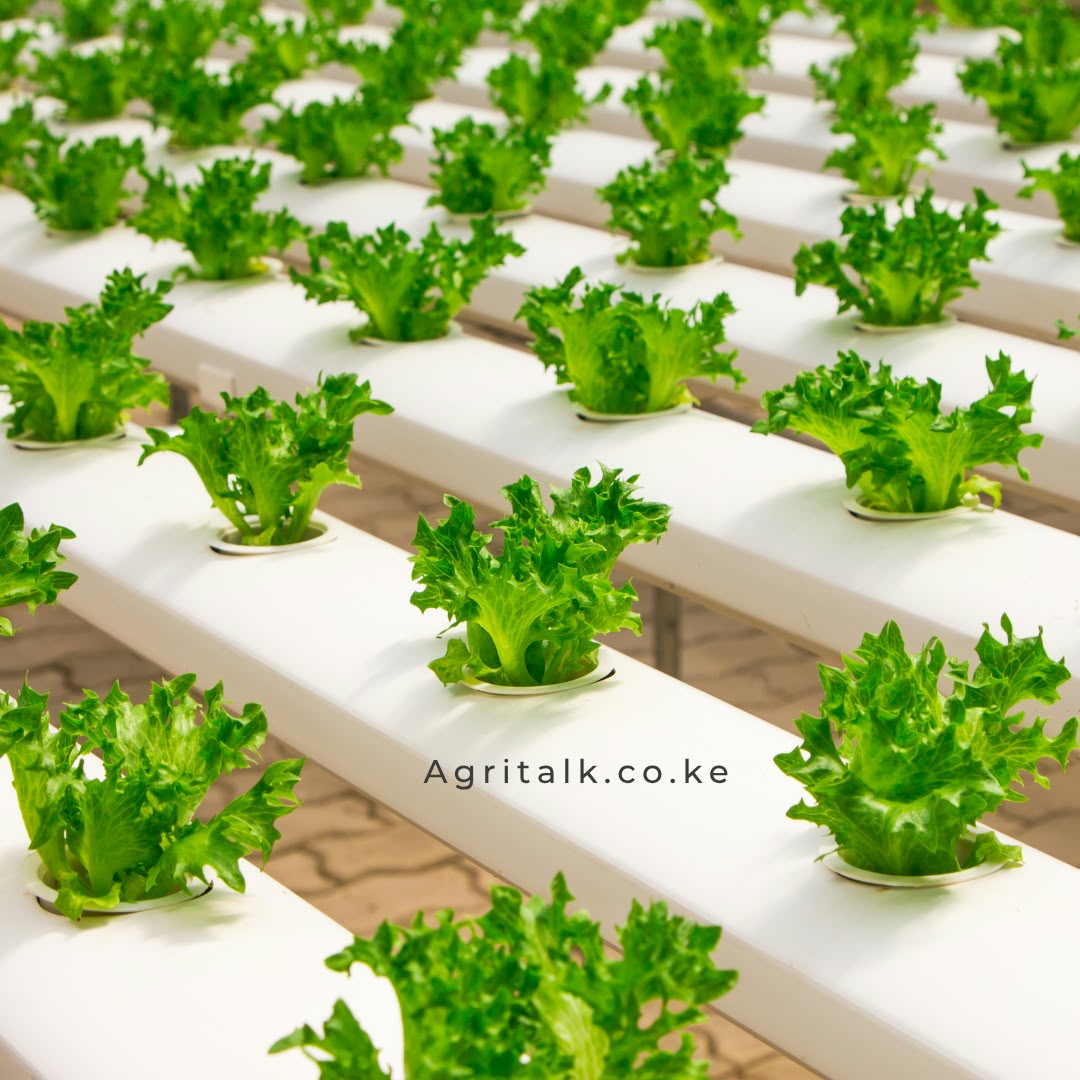
Instead of planting the lettuce in a traditional garden, you could install hydroponic channels. Each lettuce plant is positioned in an opening, while nutrient-rich water flows through the channels and reaches the plant roots.
The result is a growing system that does not require traditional agricultural soil.
How Can Plants Grow Without Soil?
This is one of the most interesting things about hydroponics.
Soil performs several important functions in conventional agriculture. It provides:
- Water
- Nutrients
- Physical support
- Oxygen around the roots
Hydroponic systems provide these functions in different ways.
For example:
Plant support → Growing medium or hydroponic structure
Water → Nutrient solution
Nutrients → Dissolved minerals
Oxygen → Air around the roots or aerated water
Light → Sunlight or artificial grow lights
Therefore, soil is not technically essential for plant growth.
What plants need is access to the resources that soil normally provides.
How Does Hydroponic Farming Work?
Although hydroponic systems can look complicated, the basic concept is relatively simple.
A typical hydroponic system includes:
1. Water Reservoir
The reservoir stores the water and nutrient solution.
2. Nutrients
Specially formulated nutrients provide plants with essential elements required for growth.
3. Water Pump
Many systems use a pump to move nutrient-rich water around the growing system.
4. Growing Channels or Containers
These hold the plants and allow their roots to access the nutrient solution.
5. Growing Medium
Some systems use materials such as coco peat or perlite to support the plants.
6. Oxygen
Plant roots need oxygen. Depending on the system, oxygen may be supplied through exposure to air or an air pump.
7. Monitoring Equipment
Commercial growers often monitor factors such as:
- pH
- Electrical conductivity (EC)
- Temperature
- Water level
- Humidity
Together, these components create an environment where plants can grow without traditional soil.
What Can You Grow Without Soil?
One of the biggest questions beginners ask is:
“What plants can be grown hydroponically?”
The answer is: many more crops than you might expect.
Some popular hydroponic crops include:
| Crop | Hydroponic Suitability |
|---|---|
| Lettuce | Excellent |
| Spinach | Very suitable |
| Kale | Suitable |
| Basil | Very suitable |
| Mint | Suitable |
| Coriander | Suitable |
| Microgreens | Excellent |
| Tomatoes | Suitable |
| Cucumbers | Suitable |
| Peppers | Suitable |
| Strawberries | Suitable with appropriate systems |
Leafy vegetables and herbs are particularly popular because wide varieties grow relatively quickly and don’t require much structural support.
Larger plants such as tomatoes and cucumbers can also be grown hydroponically but generally require more space, support and careful management.
Why Is Lettuce Popular in Hydroponic Farming?
Lettuce is one of the most commonly associated crops with hydroponic farming.
Why?
It has several characteristics that make it suitable:
- It grows relatively quickly.
- It does not require deep roots.
- It can be grown in compact systems.
- It can be harvested regularly.
- It is widely used in salads and food service.
For example, a small commercial grower could produce hydroponic lettuce and supply restaurants, supermarkets or local food retailers.
However, production should always match market demand.
What Are the Different Types of Hydroponic Systems?
Different systems are designed for different crops, spaces and production goals.
1. Nutrient Film Technique (NFT)
NFT involves continuously circulating a thin layer of nutrient-rich water through growing channels.
Plant roots extend into the channels and absorb water and nutrients.
Best suited for:
- Lettuce
- Herbs
- Leafy vegetables
Advantages:
- Efficient use of water
- Compact design
- Suitable for commercial production
- Easy to monitor
Challenge:
Because the system often relies on continuous water circulation, pump failure can quickly affect plants.
2. Deep Water Culture (DWC)
In a Deep Water Culture system, plant roots are suspended in nutrient-rich water.
An air pump supplies oxygen to the water.
DWC is relatively simple and can be useful for:
- Home growers
- Beginners
- Educational projects
- Small-scale vegetable production
3. Drip Hydroponics
Drip systems deliver nutrient solution directly to individual plants.
They are particularly useful for larger crops such as:
- Tomatoes
- Cucumbers
- Peppers
- Strawberries
A drip system can give growers greater control over how much water and nutrient solution each plant receives.
4. Vertical Hydroponics
Vertical hydroponic systems grow plants in stacked layers.
Instead of spreading plants across a large horizontal area, growers use vertical space.
For example, a small indoor growing facility could have several levels of leafy vegetables.
This can increase the number of plants produced per unit of floor space.
However, vertical farming may require additional investment in lighting, structural systems, climate control and automation.
What Nutrients Do Hydroponic Plants Need?
Growing plants without soil does not mean plants can grow without nutrients.
Plants require several essential nutrients.
Macronutrients include:
- Nitrogen
- Phosphorus
- Potassium
- Calcium
- Magnesium
- Sulfur
Micronutrients include:
- Iron
- Zinc
- Copper
- Manganese
- Boron
- Molybdenum
In traditional agriculture, many of these nutrients are obtained from soil.
In hydroponics, they are supplied through the nutrient solution.
This gives growers greater control over plant nutrition.
Why Are pH and EC Important in Hydroponics?
Two important measurements in hydroponic farming are pH and EC.
What Is pH?
pH measures how acidic or alkaline the nutrient solution is.
If the pH is outside the appropriate range for a particular crop, the plant may have difficulty absorbing certain nutrients.
For this reason, hydroponic growers regularly monitor and adjust pH.
What Is EC?
EC stands for Electrical Conductivity.
It provides an indication of the concentration of dissolved salts in the nutrient solution.
Monitoring EC helps growers determine whether their nutrient solution is too weak or too concentrated.
Together, pH and EC measurements help growers manage plant nutrition more accurately.
Does Hydroponic Farming Save Water?
One of the major attractions of hydroponics is its potential for efficient water use.
In many hydroponic systems, water is circulated through the growing system rather than simply flowing away into the soil.
The same water can potentially be collected, monitored and recirculated.
However, hydroponics does not automatically mean zero water loss.
Water can still be lost through:
- Plant transpiration
- Evaporation
- System leaks
- Cleaning
- Drainage
The actual amount of water used depends on the crop, climate, system design and management practices.
What Are the Benefits of Hydroponic Farming?
Hydroponic farming has several potential advantages.
1. Efficient Use of Space
Plants can be grown in compact systems, and vertical designs can make use of unused vertical space.
2. Greater Nutrient Control
Growers can directly manage the nutrients supplied to plants.
3. Potentially Efficient Water Use
Recirculating systems can reduce water losses compared with some conventional growing methods.
4. Reduced Dependence on Soil
Hydroponics can be used in places where soil is poor, contaminated or unavailable.
5. Suitable for Urban Agriculture
Hydroponic systems can be adapted to urban environments where agricultural land is limited.
6. Protected Production
When hydroponics is combined with a greenhouse or indoor facility, growers can gain greater control over environmental conditions.
7. Potential for Consistent Production
Controlled growing systems can make it easier to establish consistent production schedules.
What Are the Disadvantages of Hydroponic Farming?
Hydroponics also comes with challenges.
Higher Initial Costs
Commercial hydroponic systems can require significant investment in:
- Pumps
- Pipes
- Growing channels
- Nutrient systems
- Greenhouses
- Sensors
- Lighting
- Climate control
Technical Knowledge
Successful hydroponic production requires knowledge of plant nutrition, water quality, pH, EC and system maintenance.
Dependence on Equipment
A failed pump or blocked pipe can affect plants quickly.
Electricity Requirements
Some systems depend heavily on electricity for pumps, aeration, lighting and environmental control.
Disease and Pest Management
Hydroponic farming does not eliminate pests and diseases.
Growers still need appropriate plant-health management practices.
Market Risk
Producing crops does not guarantee that they will sell at a profitable price.
Is Hydroponic Farming Profitable?
Hydroponic farming can be profitable, but profitability depends on many factors.
These include:
- Crop selection
- Yield
- Selling price
- Electricity costs
- Labour
- Water
- Nutrients
- Packaging
- Transportation
- Equipment maintenance
- Market demand
Consider two growers producing the same crop.
One grower has established contracts with restaurants and retailers and has predictable demand.
The other grower produces the same quantity but has no established customers.
Even though their production systems may be identical, their financial results could be very different.
This is why market research should happen before large-scale investment.
How Much Does It Cost to Start a Hydroponic Farm?
There is no universal startup cost.
The investment depends on the size and complexity of the system.
A small home hydroponic setup may require relatively little equipment.
A commercial farm may require:
- Greenhouse infrastructure
- Hydroponic channels
- Water tanks
- Pumps
- Nutrient systems
- Sensors
- Irrigation equipment
- Electricity
- Backup power
- Labour
- Packaging facilities
- Cooling or storage systems
Before investing, prepare a detailed business plan that includes both startup costs and ongoing operating expenses.
How Can a Beginner Start Hydroponic Farming?
If you are new to hydroponics, starting small is often a practical way to learn.
Step 1: Learn the Basics
Understand plant nutrition, pH, EC, water quality and hydroponic systems.
Step 2: Choose a Crop
Start with a crop that is suitable for your system and has a market.
Step 3: Choose a System
NFT, DWC and drip systems are among the options available.
Step 4: Test Your Water
Water quality can affect nutrient management.
Step 5: Set Up a Small System
Start with a manageable number of plants.
Step 6: Monitor the Plants
Regularly check:
- Plant growth
- Root health
- pH
- EC
- Water levels
- Temperature
- Pests
- Diseases
Step 7: Record Your Results
Keep records of:
- Seeds used
- Nutrients
- Water consumption
- Electricity
- Growth rates
- Harvest quantities
- Crop losses
- Sales
These records can help you understand the actual cost of production.
Step 8: Expand Gradually
Once you understand your system and market, you can consider increasing production.
Can Hydroponic Farming Be Done at Home?
Yes.
Small hydroponic systems can be used by home gardeners to grow vegetables and herbs.
For example, a home grower could set up a small system for:
- Lettuce
- Basil
- Mint
- Spinach
- Microgreens
Home hydroponics can also be useful for teaching children and students about plant biology, nutrition and sustainable agriculture.
Discover more from AgriTalk Kenya
Subscribe to get the latest posts sent to your email.